Attending the IEC TC 62 Meeting in London (with a Mini-Travel Twist)
Back in April 2018, I traveled to London for an international standardization meeting: IEC TC 62 (Electrical Equipment in Medical Practice). For those unfamiliar, IEC TC 62 is responsible for developing and maintaining international standards for medical devices. When groundbreaking medical technology emerges, this committee updates existing standards; when a standard becomes obsolete, they retire it.
While these international standards aren’t applied to local markets instantly, they eventually become global law with a slight time lag. For medical device manufacturers aiming for overseas export, keeping a close eye on these shifts is not just optional—it’s survival. These standards directly dictate the regulatory approval and licensing processes worldwide.
The Erratic London Weather
By mid-April, Korea enjoys warm spring weather, but London was chilly enough that I had to wear a scarf in the evening.
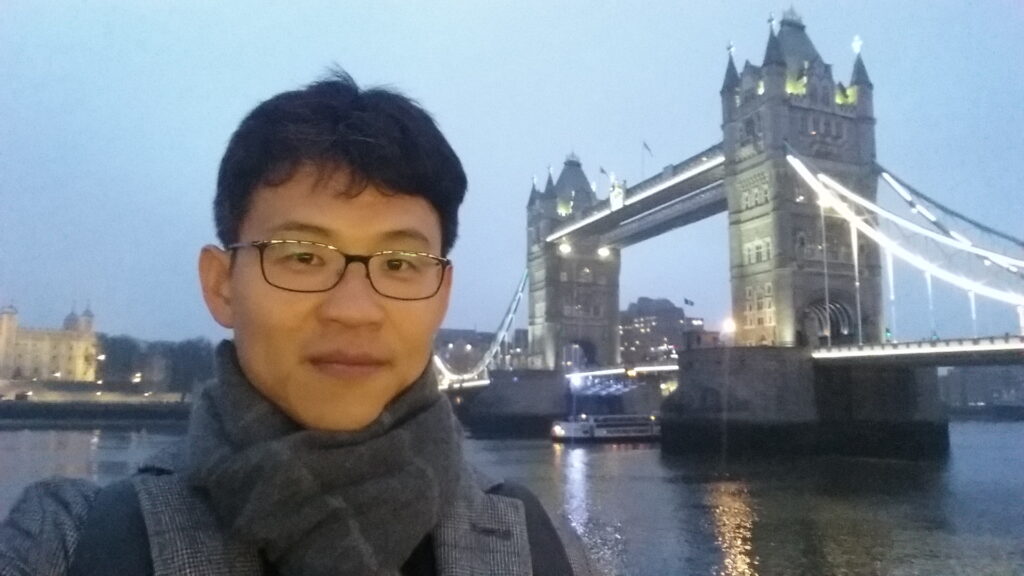
What fascinated me most was how fast it changed. It was freezing on April 12th, but just a week later, the weather cleared up so beautifully that I could walk around without a coat. Locals say London’s weather can be divided into two eras: before and after British Summer Time (BST). Summer with BST is stunning and perfect for travel, while winter turns into the classic, gloomy, rainy London we all know.
If you get homesick or crave Asian comfort food during the long conference weeks, London’s Chinatown is the place to go. While it’s packed with incredible Chinese restaurants, it also hosts great Korean spots. (In fact, the Korean food scene in Chinatown has expanded significantly over the last few years!)
Surviving a 2-Week International Standardization Conference
Attending a two-week IEC plenary meeting is no walk in the park. Sessions ran from early morning until evening. Battling jet lag while maintaining intense concentration to catch every nuance of the English discussions was exhausting. I could handle the morning sessions just fine, but by the afternoon, my brain capacity was running on fumes. Fortunately, official meeting minutes are meticulously recorded, allowing me to review anything I might have missed.
At the time, my home country played more of a participating role rather than leading the discussions, meaning we spent a lot of time listening to the insights of pioneering nations.
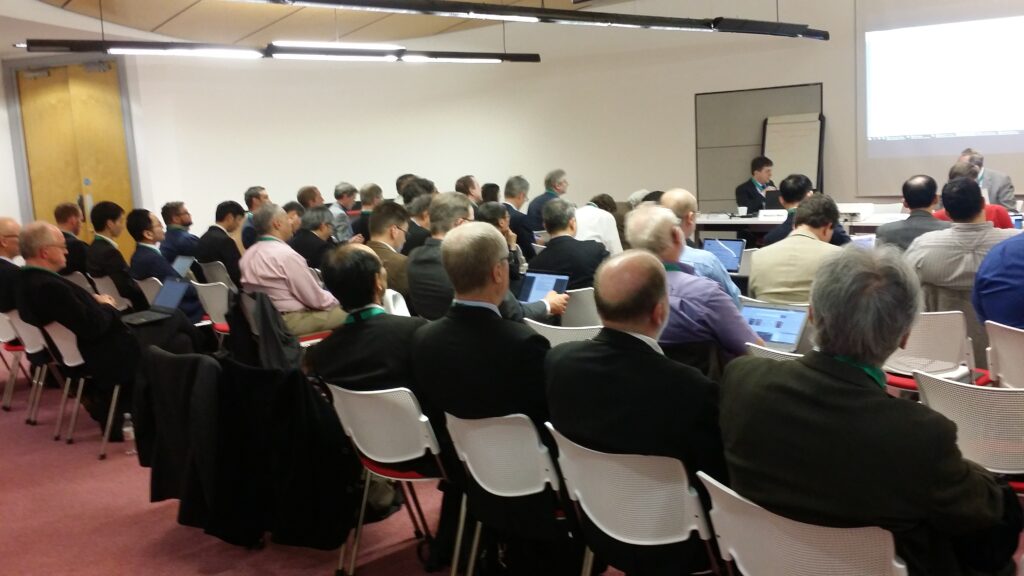
A plenary standardization meeting looks like a typical corporate conference. Representatives from each country take their seats, while the TC 62 Chair and Secretary sit at the front, driving the agenda through slide presentations. The Secretary usually manages the flow, while the Chair chimes in on critical issues or finalizes consensus resolutions.
Inside the Working Group (WG) Meetings
The atmosphere changes drastically when you enter a WG (Working Group) session. WGs are where the actual drafting happens. Experts from across the globe gather around a table to debate and craft the technical documents line by line, word by word.
For a new standard to be born, it must pass through a strict lifecycle:
- NP (New Proposal)
- WD (Working Draft)
- CD (Committee Draft)
- CDV (Committee Draft for Vote)
- FDIS (Final Draft International Standard)
- IS (International Standard)
According to the IEC’s official guide on standard development stages, this grueling journey from NP to IS typically takes 3 to 5 years. Passing each milestone requires aligning the geopolitical and economic interests of various countries. This is exactly why attending these conferences in person is vital—you need to build a personal network and establish trust.
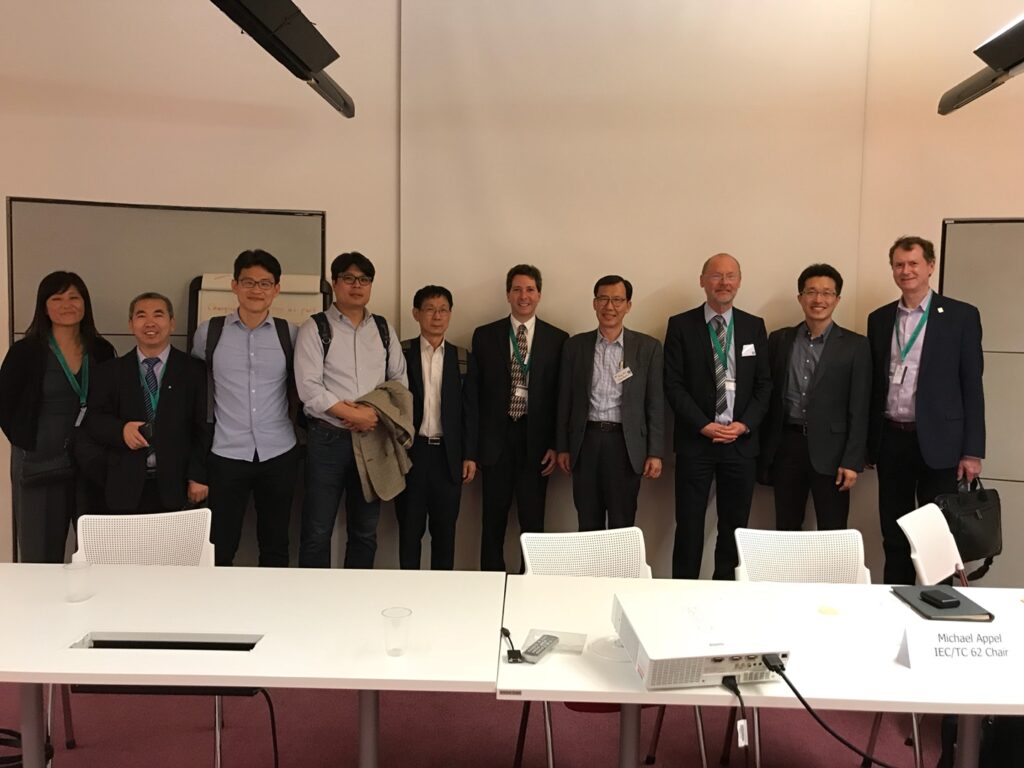
Historical Note: In the photo above, the gentleman in the center was the TC 62 Chair at the time, the third person from the right was the TC 62 Secretary, and the second from the left was the TC 62B Chair. As of 2026, these roles have been passed on to new leaders, but their legacy in shaping global medical safety remains.
💡 Pro-Tip for International Delegates:
Don’t skip the coffee breaks and social dinners. The real breakthroughs in standard negotiations don’t happen on the microphone—they happen over a cup of coffee or a glass of wine where you can informally pitch your country’s technical stance.
After Hours: West End Musicals and Football Magic
Mamma Mia! at the Novello Theatre
Business trips shouldn’t be 100% business. One evening, my colleagues and I booked tickets to see Mamma Mia! London’s West End, alongside New York’s Broadway, is the pinnacle of musical theatre. Even though I didn’t catch 100% of the witty British dialogue, the phenomenal acting, timeless ABBA tracks, and vibrant energy made it an unforgettable night. You can book West End tickets via authorized platforms like London Theatre Tickets.
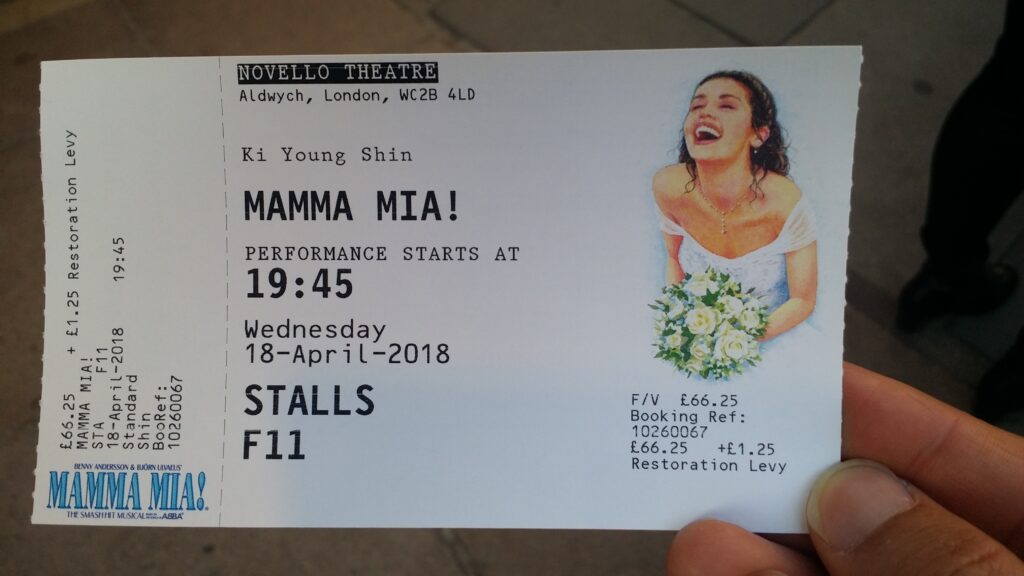
⚠️ A Quick Warning for Theatre-Goers: Inside the venue, they sell the official soundtrack CDs. I hesitated and decided to come back the next day just to buy the merchandise, but security stopped me at the door. They do not let you enter the theatre shop unless you hold a valid ticket for that day’s show. If you want memorabilia, buy it on the spot!
Watching a Legend Before He Was a King: Tottenham vs. Manchester City
By a stroke of absolute brilliance in timing, I managed to score tickets to a Premier League match between Tottenham Hotspur and Manchester City.
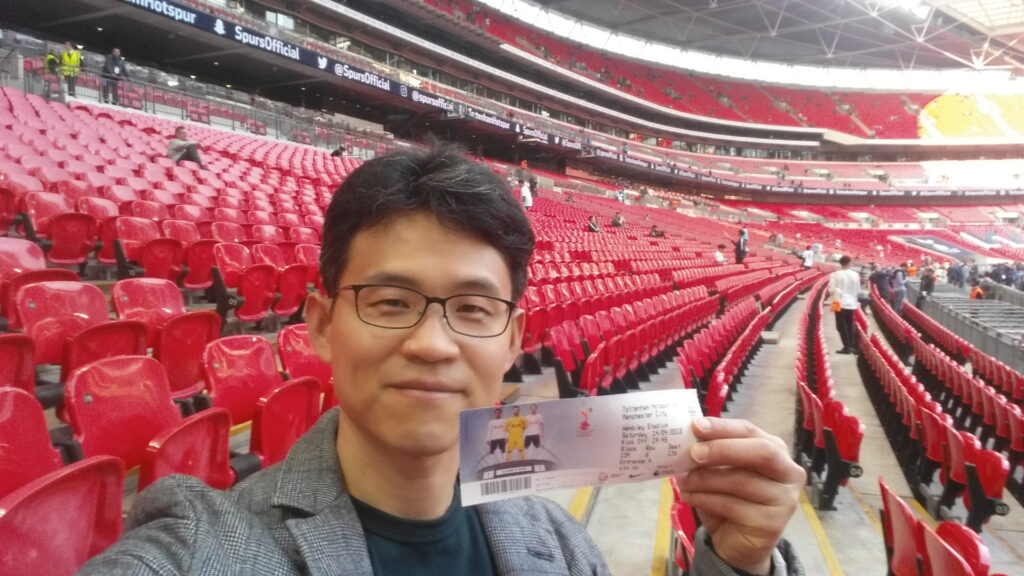
Back in April 2018, Korean superstar Son Heung-min (Player No. 7) wasn’t the undisputed legendary captain of Spurs like he is today. Back then, he was still fighting for a permanent starting spot and was often used as a tactical super-sub. There was no guarantee I would even see him step onto the pitch. Man City was incredibly dominant that night, making the first half a frustrating, defensive struggle for Tottenham.
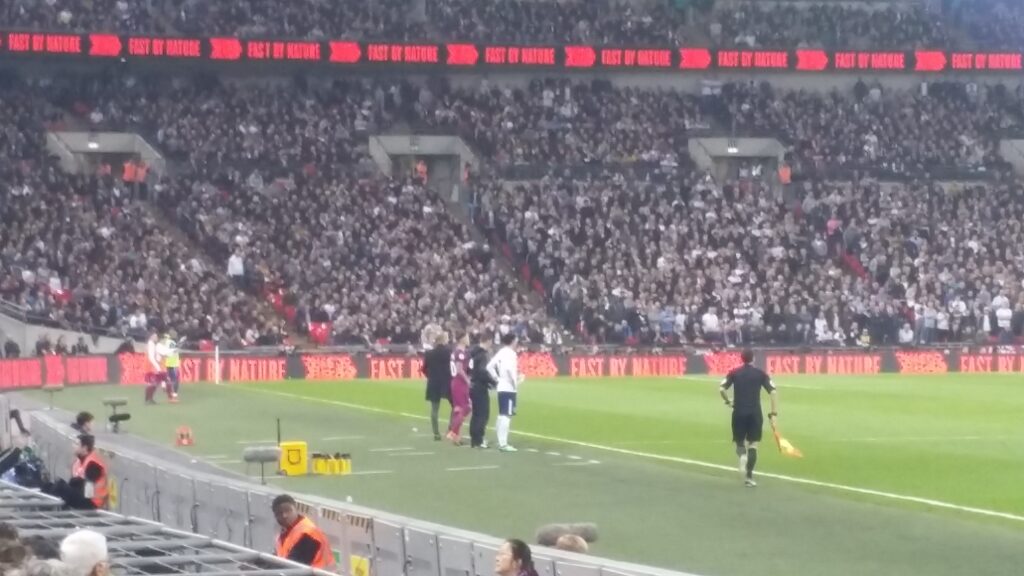
Spurs struggled to mount a proper counter-attack. But deep into the second half, the stadium erupted as Son Heung-min was subbed on. Driven by the burning need to prove his worth, Son ran his heart out, injecting immediate electricity and pace into Tottenham’s stagnant offense.
Watching him sprint across that pitch, nobody in that stadium could have definitively predicted that he would go on to become a Premier League Golden Boot winner and a Tottenham Hotspur legend. To the local crowd back then, he was simply a hardworking, highly capable squad player from Asia.
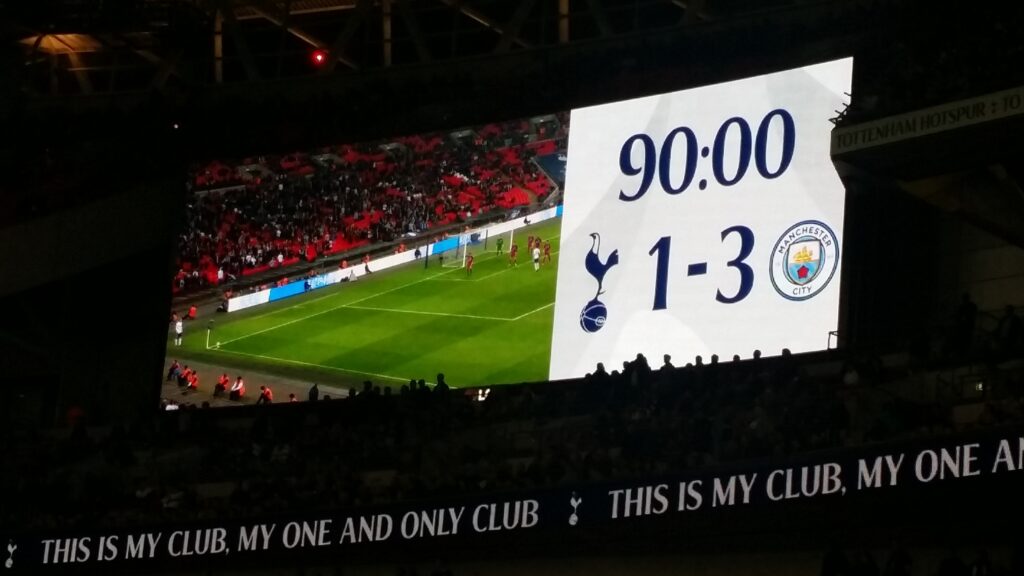
The match ended in a 3-1 victory for Manchester City. Despite the disappointing scoreline for Spurs, seeing Son play live in London was worth every penny.
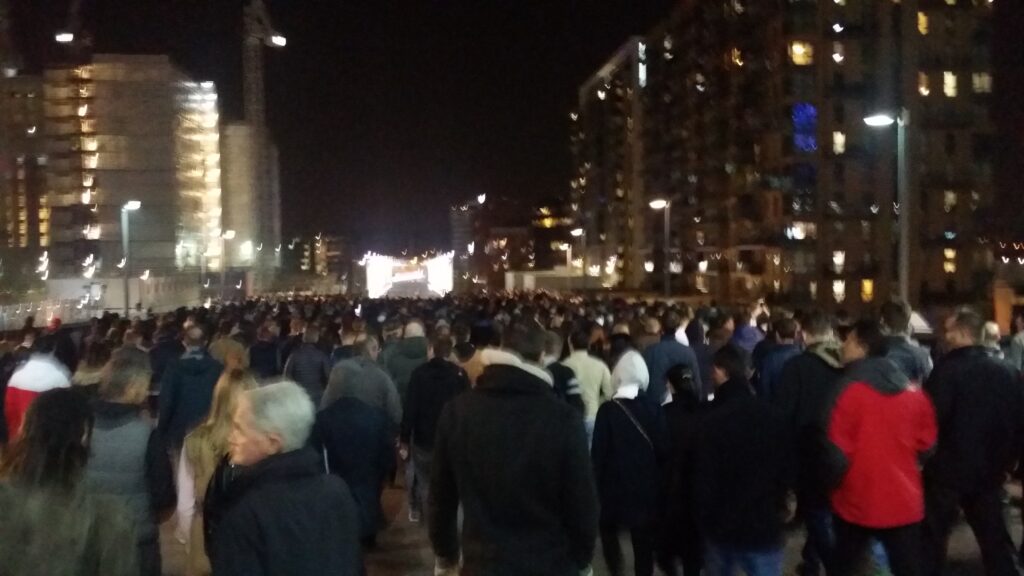
Leaving the stadium, I expected absolute chaos trying to get to the Underground station with tens of thousands of fans. However, I witnessed the beauty of British queuing culture. The crowd moved toward the station at a remarkably slow, synchronized, and respectful pace. Mounted police managed the major intersections, but the fans remained incredibly patient. By just going with the flow, I safely made it back to my accommodation without a single hassle.
A Food Critique: The History Behind British Cuisine
During my stay, I finally tried Britain’s iconic national dish: Fish and Chips.
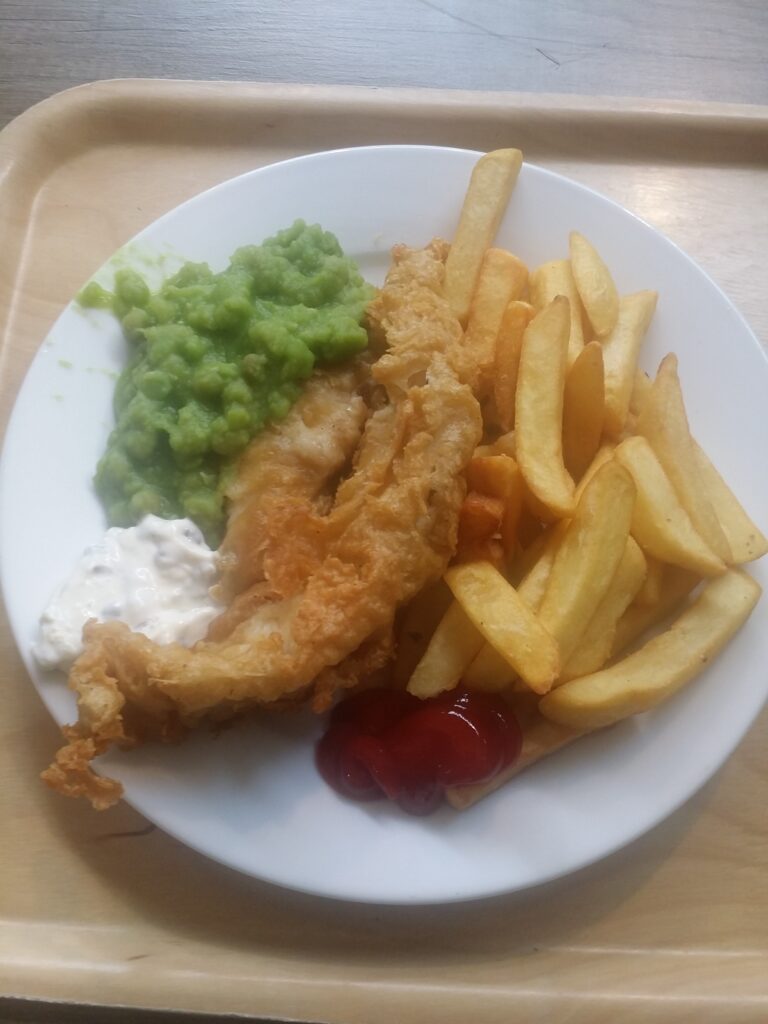
At first glance, it’s incredibly simple—deep-fried white fish served with chunky potato chips. It felt less like haute cuisine and more like honest, hearty working-class comfort food.
Historically, during the height of London’s Industrial Revolution, the city’s population skyrocketed. Housing became cramped, and many quick-built tenements completely lacked kitchens. Workers needed cheap, high-calorie meals on the go, which birthed the commercial Fish and Chips industry. Depending on the pub or shop, you can choose between Cod, Haddock, Plaice, or Mackerel.
🍟 The Authentic Way to Eat It: Drizzle the piping-hot fried fish generously with malt vinegar and a pinch of salt. It might feel strange to put vinegar on fried food at first, but trust me—the acidity cuts through the grease perfectly. It is highly addictive!
The reason Fish and Chips became a true national staple lies in the Industrial Revolution itself. The rapid development of steam trawlers and railways allowed fresh cod caught in the North Sea to be transported to the heart of London within hours.
Why Did British Food Get a Bad Reputation Historically?
As a foodie, I researched why traditional British cuisine often gets mocked globally compared to French or Italian food. I found two fascinating historical reasons:
- The Puritan Influence (17th Century): Following the English Civil War, Puritanism swept the nation, promoting strict asceticism and self-restraint. Indulging in the sensory pleasures of food was viewed as sinful. Consequently, complex sauces, heavy spices, and extravagant culinary techniques vanished. They were replaced by simple, unadorned roasting or boiling—which explains the origin of the traditional Sunday Roast (where a piece of meat was popped into the oven Sunday morning, left to cook while the family attended church, and eaten plainly afterward).
- The World War II Rationing (1939–1954): WWII forced the UK into a strict food rationing system that lasted for an astonishing 15 years. Because citizens had to cook using minimal, government-allocated basic ingredients, complex regional recipes and culinary traditions died out over a generation. The collective palate shifted from “How do we make this delicious?” to “How do we fill our stomachs to survive?”
Thankfully, modern London has completely shed this past, transforming into one of the most vibrant, diverse, and world-class culinary capitals of the world.
Whether you are visiting London for an intense international tech conference or to cheer on your favorite football club, this city offers a layer of history and culture that leaves you wanting more.